
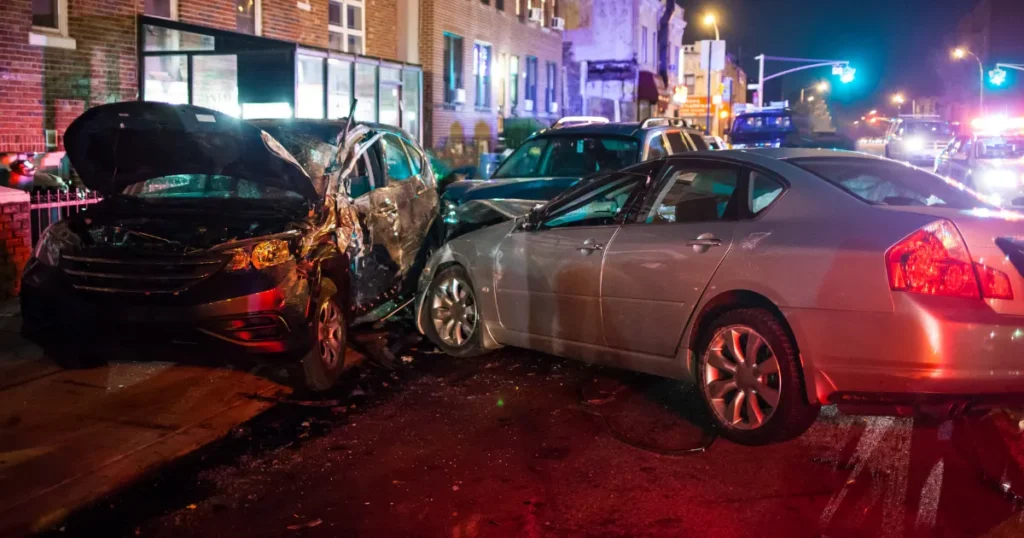
When a collision happens in the dark, a site visit at noon documents conditions the driver never saw. In daylight, a dead streetlight looks like every other pole on the block.
I worked a decade as an EMT before I became an investigator. Most scenes I responded to were cleared within the hour, and the video and witnesses don’t last much longer.
What the Night Visit Found
In a recent case, a city vehicle struck a pedestrian before dawn on a commercial street in Southern California. Our daytime visits covered the footage and witness canvass we were hired for. To measure visibility, we went back at night.
Two streetlights were out, one over each direction of travel, and no one appeared to have reported them. Our light-meter readings fell below what the Illuminating Engineering Society (IES) guidance cited in our report gives for a medium-traffic commercial street.
We also drove the street both ways with a dashcam and flew a drone over the block to record the lighting from above.
Footage, Cameras, and a Gate
We were retained several weeks after the collision. Most private surveillance systems overwrite in 7 to 30 days, so some footage may have been gone before we started knocking on doors.
We also requested the city’s traffic camera video. The city said those cameras show live traffic only and store nothing. If your case depends on city footage, ask early.
In another case, a pedestrian was killed before dawn on a Southern California street with dirt sidewalks and no streetlights. When we arrived, a driveway gate next to the spot was swung outward across the sidewalk. Older street-level imagery showed it closed. Before we finished photographing, it had swung back in.
We don’t know where the gate was on the date of loss, but we photographed both positions.
What We Bring to the Scene
On a nighttime case, we typically bring:
- A light meter.
- A measuring wheel, to locate the spot and measure lanes, shoulders, and distances to ramps and crossings.
- A dashcam and a drone, for nighttime video from the road and from above.
- Historical street-level imagery, to show what changed since the collision.
- Statewide crash records, to find similar collisions that may show a public entity was on notice.
Photos and videos are labeled and delivered with the written report.
Deadlines
In California, most injury and death claims against a public entity must be presented within six months. In the gate case, the public defendants had already filed demurrers when counsel called us, and our findings were due before the opposition.
In the first weeks of a serious injury or fatality on a public road, we recommend:
- Sending an investigator at the time the collision happened.
- Requesting preservation of private video right away, and confirming whether public cameras record at all.
- Photographing anything that can move, such as gates, barriers, signs, and debris.
We run night visits and incident site investigations throughout California from our Los Angeles, San Diego and San Francisco offices. You can reach me directly at 818-818-8000.
Frequently Asked Questions
Why should a crash scene be inspected at night?
If the collision happened in the dark, the conditions that matter most are lighting and visibility, and those can only be measured at night. A visit at the same hour can document dark streetlights, light-meter readings, and what a driver could see from the lane.
How long is surveillance video kept after a crash?
Most private surveillance systems overwrite footage in 7 to 30 days. Some public traffic cameras record nothing at all. In one of our recent cases, the city confirmed its traffic cameras were live-view only. Preservation requests should go out in the first days after a collision.
What equipment is used in a nighttime scene investigation?
Typically a light meter, a measuring wheel, a dashcam and a drone, supported by historical street-level imagery and statewide crash records. Each reading is documented with photos or video and delivered with the written report.
How long do you have to file a claim against a public entity in California?
Under California Government Code section 911.2, a claim for death or personal injury must be presented to the public entity within six months after the cause of action accrues. Most other claims have two years. Counsel should confirm the deadline for each case.
When should an investigator be brought in after a serious collision?
In the first weeks, while the lighting, physical objects, and video still reflect conditions at the time of the crash, and well before the six-month deadline for injury and death claims against public entities.
If you need to investigate a nighttime incident such as a collision, reach out to USA Express. Our experienced team runs night visits and incident site investigations throughout California from our Los Angeles, San Francisco, and San Diego locations. Call us at 877-872-3977 or contact us online. We serve clients nationwide.