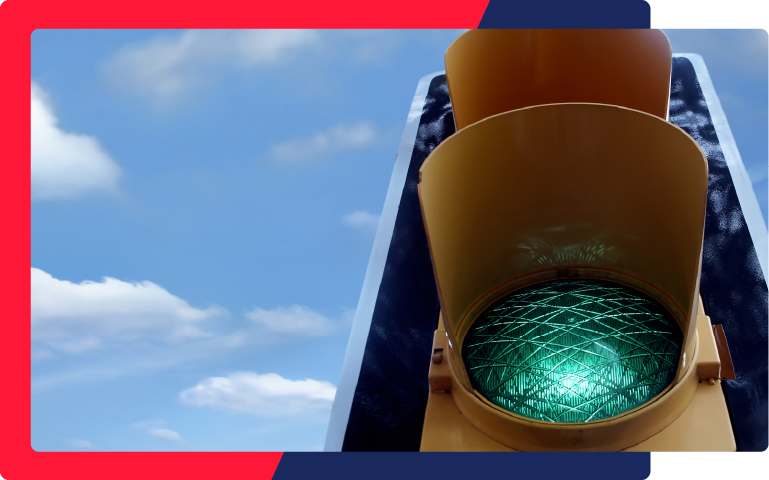
In many intersection collision cases, the question of who had the green light — or whether the light was functioning correctly — is central to establishing liability. USA Express investigates traffic signal phasing and timing for law firms and insurance defense teams, working to obtain signal data and documentation that can clarify exactly what the lights were doing at the time of an accident, and whether governmental entity negligence contributed to the collision.
Traffic signal phasing refers to the sequence and timing of signal changes at an intersection — the duration of green, yellow, and red phases for each direction of travel, as well as left-turn and pedestrian phases. This information is programmed into signal controllers and can vary by time of day, day of week, and traffic conditions. In a collision case, understanding the phasing that was in effect at the time of the accident is often essential to determining which party had the right of way — and whether the governmental entity responsible for the signal may bear liability.
A malfunctioning, improperly timed, or inadequately maintained traffic signal can expose the government agency responsible for it — whether a city, county, or state transportation department — to significant liability. These governmental entity claims are among the highest-value exposure points in intersection collision litigation, but they are also subject to strict government tort claim deadlines that can be as short as six months from the date of the incident. Early signal phasing investigation is essential to identifying this exposure before the window to file a government claim closes.
Traffic signal timing data is maintained by the agency that controls the signal — typically a city traffic engineering department, county public works agency, or state transportation authority (Caltrans for state highways). Obtaining this data usually requires a formal public records request and, in some cases, coordination with the agency’s traffic engineering staff. USA Express manages this process on behalf of attorneys and clients, identifying the responsible agency, submitting appropriate requests, and following up until the data is produced.
Yes — and time is a factor. Many traffic signal controllers store event logs that record signal changes in real time, but these logs have limited storage capacity and older data is overwritten as new data is recorded. Additionally, if a signal controller is reprogrammed or replaced after an accident, historical timing information may be lost. USA Express recommends initiating public records preservation requests and signal data investigations as soon as possible after any intersection collision where signal phasing may be relevant.