
Key Takeaways:
- “Sub rosa” surveillance is covert, while “day-in-the-life” filming occurs with the injured person’s consent.
- Plaintiff attorneys use visual evidence to show limitations, care needs, and changes in daily functioning.
- Investigators must respect privacy, property, licensing, and recording laws.
- Original files, logs, and a chain of custody help support admissibility.
Our highly skilled personal injury investigators at USA Express help plaintiff firms develop visual evidence of injuries and their daily consequences. A planned sub rosa investigation or day-in-the-life video can provide context that medical records and testimony may not convey, making documented damages harder to minimize.
What Is a Sub Rosa Investigation?
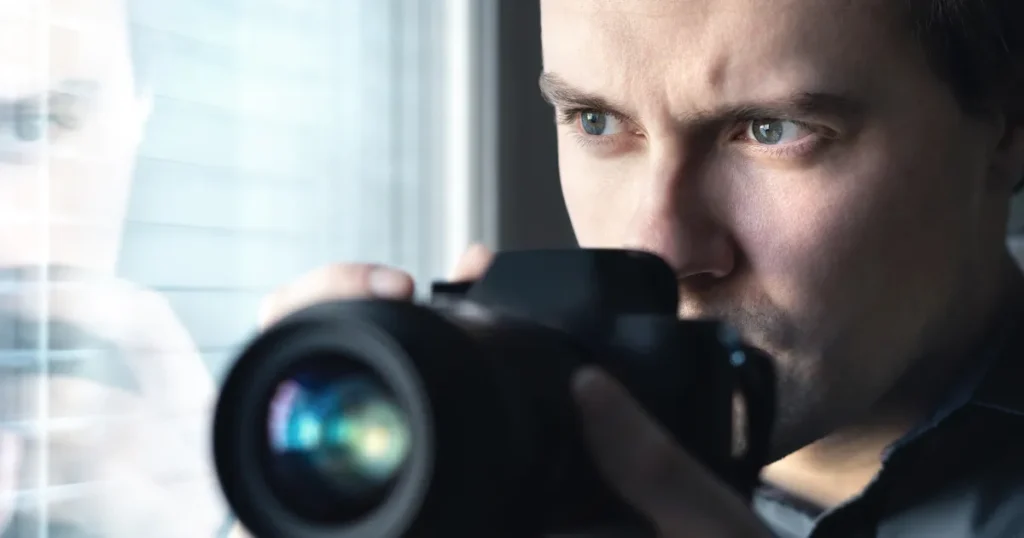
A “sub rosa investigation” is discreet surveillance conducted without alerting the person observed. Defense insurers frequently use it to find activity they claim conflicts with an injured person’s limitations. A brief clip may omit pain, recovery time, assistance, or whether a task can be sustained regularly.
Plaintiff counsel can retain an investigator to assess surveillance exposure, document public activity by other parties, or preserve conditions. The goal should be truthful context, not staging conduct or coaching a client. Attorneys should prepare clients by advising them to follow medical restrictions and describe their abilities accurately.
How Is Damages Surveillance Different From Liability Surveillance?
“Liability surveillance” addresses how an event occurred or whether a defendant continues unsafe conduct. It may document traffic patterns, property conditions, commercial practices, or vehicle use. “Damages surveillance” focuses on the injury’s effects, including mobility restrictions, dependence on caregivers, fatigue, and difficulty performing activities.
A surveillance investigation service should begin with a defined legal objective. Investigators can coordinate with counsel to avoid irrelevant recording, reduce privacy risks, and create footage that answers specific damages questions instead of collecting unfocused video.
What Is a Day-in-the-Life Video and When Is It Used?
A “day-in-the-life video” is a consent-based presentation showing how an injury affects routine activities. It may record transfers from bed, personal care, medication, therapy, transportation, work limitations, parenting, or necessary home assistance. These videos are often considered in catastrophic injury, wrongful death, and life-care-planning matters.
Credibility depends on restraint. The video should depict representative routines without dramatization, misleading edits, or unnecessary intrusion into private moments. Counsel should consider whether each segment adds relevant information and whether less intrusive proof could establish the same fact.
How Do Investigators Document Damages Legally and Ethically?
Investigators generally observe from lawful locations and avoid trespassing, entering private spaces, impersonating protected professionals, or recording where someone reasonably expects privacy. Audio-recording and consent laws vary by state, so assignments require jurisdiction-specific review. Surveillance should never involve harassment, intimidation, or interference with medical care.
For possible courtroom use, the team should preserve original files, metadata, dates, times, locations, field notes, and the chain of custody. Federal Rule of Evidence 901 requires sufficient evidence that an exhibit is what its proponent claims. Courts may still exclude relevant footage when unfair prejudice, confusion, or needless repetition substantially outweighs its value. State rules may differ.
When Should a PI Attorney Order Sub Rosa Surveillance?
Counsel should consider investigative work early when ongoing conduct, changing conditions, or foreseeable defense surveillance may matter. A targeted assignment can be valuable before key depositions, mediation, an independent medical examination, or trial preparation. Day-in-the-life filming usually works best after the medical prognosis and daily limitations are well understood.
Frequently Asked Questions (FAQs):
Can an investigator film inside someone’s home?
Not without lawful permission or authority. Homes and other private spaces generally carry strong privacy protections.
Is surveillance video automatically admissible?
No. It must be relevant, properly authenticated, and compliant with applicable evidence rules.
Should an injured person act differently when surveillance is suspected?
No. The person should remain truthful, follow medical advice, and avoid exaggerating or minimizing limitations.
Can a day-in-the-life video include family members?
Yes, with appropriate consent, particularly when family members provide necessary care or assistance.
Build Credible Visual Proof With Help From Our Highly Skilled Personal Injury Investigators at USA Express
Our personal injury investigators at USA Express provide nationwide investigative support, reporting, and legally obtained documentation for plaintiff firms. To schedule a free consultation, call today at 877-872-3977 or complete our online form. With office locations in Los Angeles, San Francisco, and San Diego, California, we proudly serve clients nationwide.